The Ministry of Industry and Trade has proposed a policy to encourage the development of self-produced, self-consumed rooftop solar power.
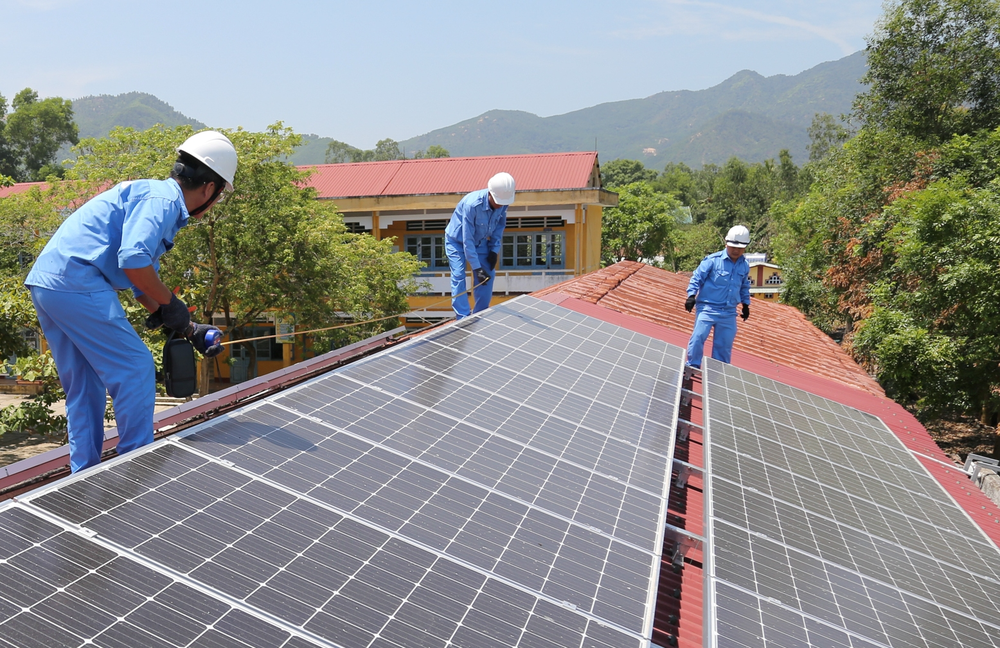
The Ministry of Industry and Trade has proposed a policy to encourage the development of self-produced, self-consumed rooftop solar power as a renewable energy project eligible for investment incentives under the law. This project is classified as a special investment priority sector and benefits from tax incentives according to legal provisions.
Policies to encourage solar power development
The Ministry of Industry and Trade is seeking opinions on the draft Decree detailing several provisions of the Electricity Law on renewable energy and new energy. To encourage the development of self-produced, self-consumed rooftop solar power, the Ministry has proposed incentive policies for this type of energy.
Accordingly, organizations or individuals developing self-produced, self-consumed rooftop solar power systems not falling within the capacity scale defined in the national power development plan and the provincial power grid development plan are exempt from the electricity operation license as specified in Article 33 of the Electricity Law.
The investment project for developing self-produced, self-consumed rooftop solar power is a renewable energy project included in the list of sectors with special investment incentives according to investment laws and enjoys tax incentives as stipulated by law.
Construction works with installed self-produced, self-consumed rooftop solar power are not required to adjust or supplement land use planning or the functionality of the buildings as required by law.
The system for self-produced, self-consumed rooftop solar power is considered technology equipment attached to the construction for cases such as residential houses or public buildings, which are classified as public assets.
Households developing self-produced, self-consumed rooftop solar power, if selling excess electricity into the national grid, are exempt or do not need to adjust their business licenses.
Selling excess electricity into the grid, but not exceeding 20% of installed capacity
Regarding the mechanism for selling excess electricity, the Ministry of Industry and Trade proposes that excess electricity can be sold to the national grid but should not exceed 20% of the actual installed capacity. Based on the operational status of the electricity system at each time, the Minister of Industry and Trade will decide on the proportion of the electricity surplus to be bought and sold.
The buying and selling of surplus electricity will be governed by the electricity law, agreements between the seller and the buyer, ensuring the following principles:
In all cases, the buyer will only pay for the amount of surplus electricity sold to the national grid corresponding to a maximum of 20% of the actual installed capacity of the power source.
The purchase price for surplus electricity will be the average electricity price from the previous year’s electricity market as published by the system operator and the electricity market.
Self-produced, self-consumed rooftop solar power systems installed at public buildings, classified as public assets, will not engage in the sale of surplus electricity.
For power sources with an installed capacity above 1,000 kW that sell surplus electricity into the national grid, they must obtain an electricity operation license according to the law.