International energy investments are waiting to flow into Vietnam.
The Head of the European Union (EU) Delegation to Vietnam, Julien Guerrier, stated that many international energy investments are waiting to flow into Vietnam.
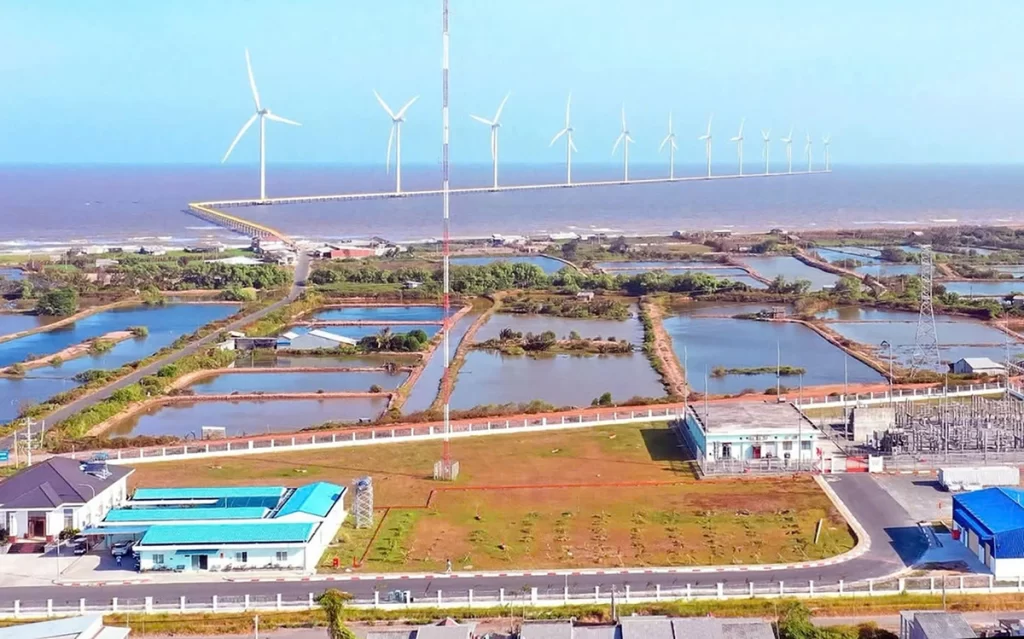
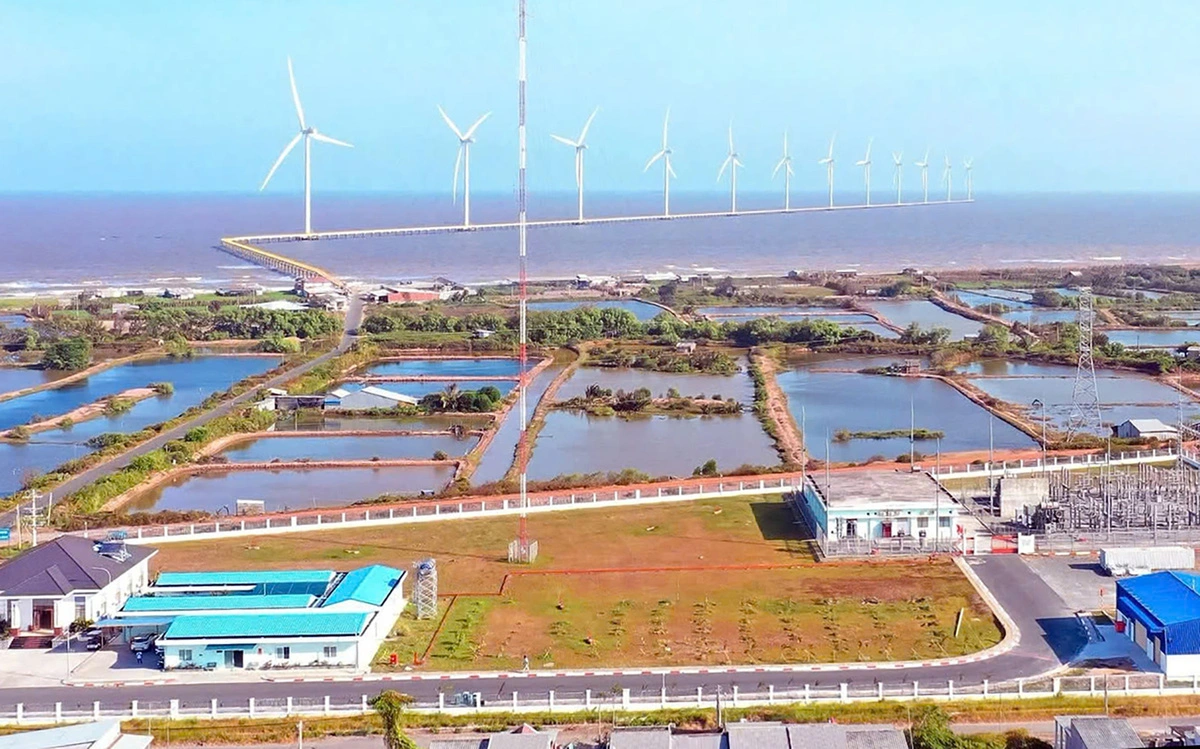
Nearshore wind power plant in South Korea – Trà Vinh – Photo: REV
On December 12 and 13, Deputy Minister of Industry and Trade Nguyễn Hoàng Long and Ambassador Julien Guerrier visited Cần Thơ City and Trà Vinh Province.
Wind Power Potential in Vietnam
In an interview with Tuổi Trẻ, Julien Guerrier, head of the EU Delegation to Vietnam, highlighted that Vietnam is facing a significant challenge in balancing three key goals: achieving net-zero emissions by 2050, ensuring sufficient energy supply for its rapidly growing economy, and keeping energy costs affordable for both residents and industries.
This challenge is even greater considering that by 2030, Vietnam’s electricity demand is expected to double. According to the EU, renewable energy is one of the most effective solutions to this issue.
ACWA Power Ready to Invest $5 Billion in Vietnam
Guerrier suggested that Vietnam has strong potential in hydroelectric power, which has been well-developed, as well as in solar, onshore wind, and offshore wind energy. However, he emphasized that Vietnam needs appropriate policies to attract both private and public investment.
He noted that the EU is coordinating funding from the G7 nations and other international partners, which shows a strong interest from global investors in Vietnam. “Once a proper legal framework is in place, offshore wind and solar power projects will develop rapidly,” he stated.
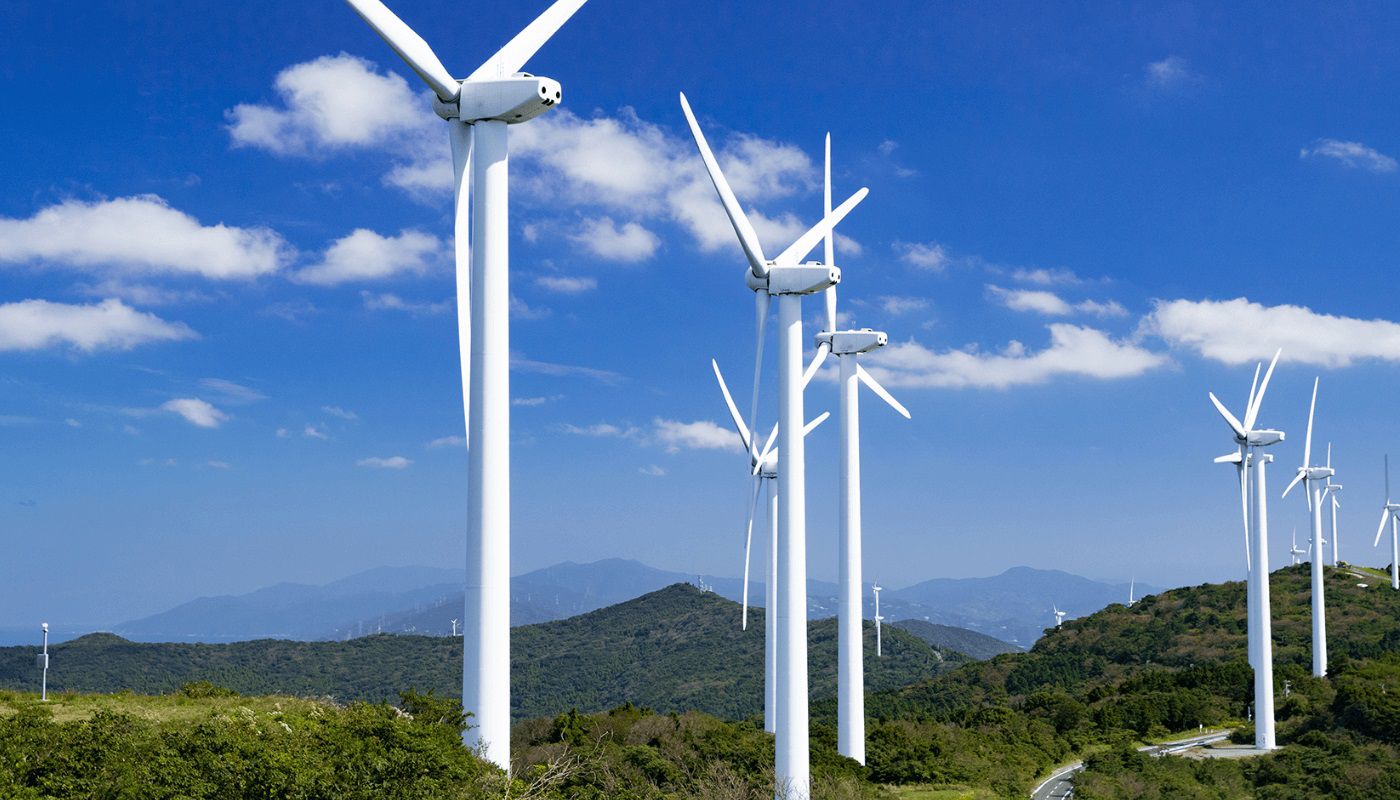
Guerrier also expressed high expectations for Vietnam’s wind power potential. Given Vietnam’s favorable geography for both nearshore and offshore wind energy, he believes that the country can not only meet domestic electricity demand but also supply energy to neighboring Southeast Asian countries. Recognizing this potential, the EU is investing in building an interconnected power grid across ASEAN.
To realize these opportunities, Guerrier proposed several policy recommendations. Firstly, EVN (Vietnam Electricity) must continue upgrading the national grid to ensure it can absorb the full output of renewable energy projects. Additionally, foreign investors are particularly concerned about regulations on exploration and exploitation rights when considering offshore wind projects.
“Vietnam needs a clear electricity pricing mechanism so investors can understand how much they can sell power to EVN for,” Guerrier said. He also highlighted the Direct Power Purchase Agreement (DPPA), approved by the Vietnamese government in July, as a promising step in attracting private sector investment.
Bold Commitment to Net-Zero Emissions
Deputy Minister of Industry and Trade Nguyễn Hoàng Long emphasized that Vietnam’s commitment to net-zero emissions by 2050 is a bold and ambitious move that marks a new phase of sustainable development. This transition requires decisive energy policies and strong investments in clean and green technologies.
“Vietnam is fortunate to have the support and cooperation of the international community, including the EU,” he said. In late 2022, Vietnam signed the Just Energy Transition Partnership (JETP) with the G7 nations and key EU members such as Germany, France, and Italy. Under this agreement, the G7 and partner countries pledged $15.5 billion over 3-5 years to support Vietnam’s clean energy transition.
Long highlighted the EU’s leadership in Vietnam’s energy transition and noted that the Ministry of Industry and Trade has already launched projects to expedite funding disbursement, including ODA, green finance, and low-interest loans. Additionally, technology transfer and renewable energy development initiatives are being implemented to accelerate Vietnam’s transition to sustainable energy.
Expanding Vietnam-EU Energy Cooperation
Guerrier reaffirmed the EU’s commitment to expanding energy cooperation with Vietnam. Recently, he signed an agreement with the Vietnamese Ministry of Finance to increase EU funding for the Water and Natural Resources Management Fund (WARM) from €20 million to €34 million ($35.6 million).
“We hope to develop even more projects. If Cần Thơ is interested, we are ready to collaborate with them and with the French Development Agency (AFD), which is implementing several EU-backed projects in the region,” Guerrier said.
Listening to Local Perspectives
As part of their mission, the EU delegation and the Ministry of Industry and Trade visited several energy projects, including:
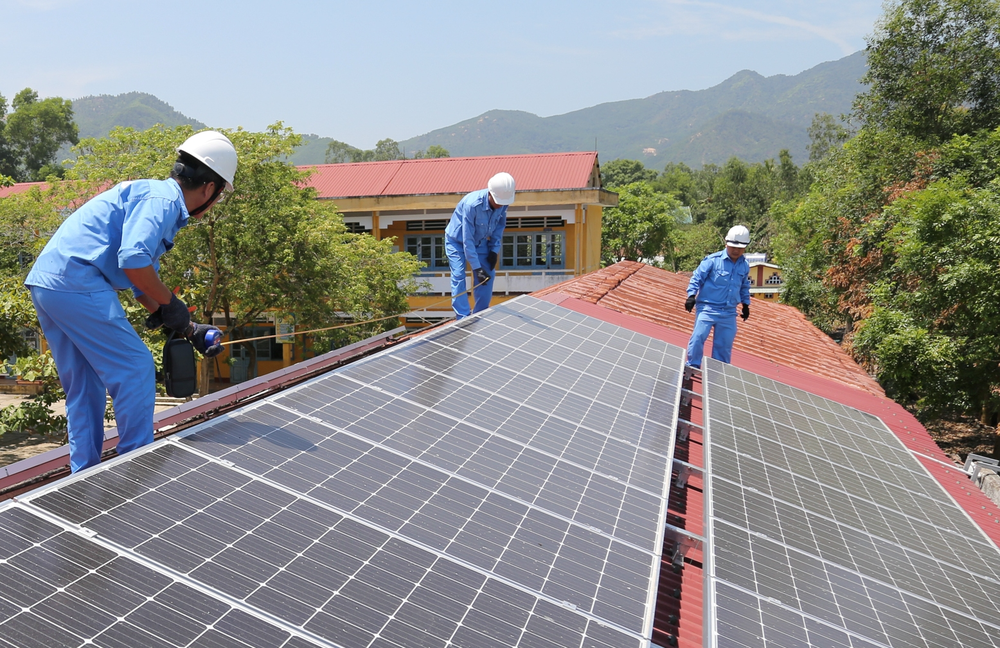
- A rooftop solar project at the De Heus Tra Fish Feed Factory in Cần Thơ, with a capacity of 458 kWp, which is expected to reduce 470 tons of CO2 emissions annually.
- An EU-funded rural electrification project in Định Môn Commune, Thới Lai District, Cần Thơ City.
- The Korea-Trà Vinh Wind Power Plant in Trường Long Hòa Commune, Duyên Hải Town, Trà Vinh Province.
The delegation also met with the People’s Committees of Cần Thơ City and Trà Vinh Province. Deputy Minister Long emphasized that the purpose of the visit was to gather input from local authorities and explore future renewable energy projects, while strengthening cooperation between Vietnamese provinces and the EU in the energy sector.
Source: TUOI TRE NEWS